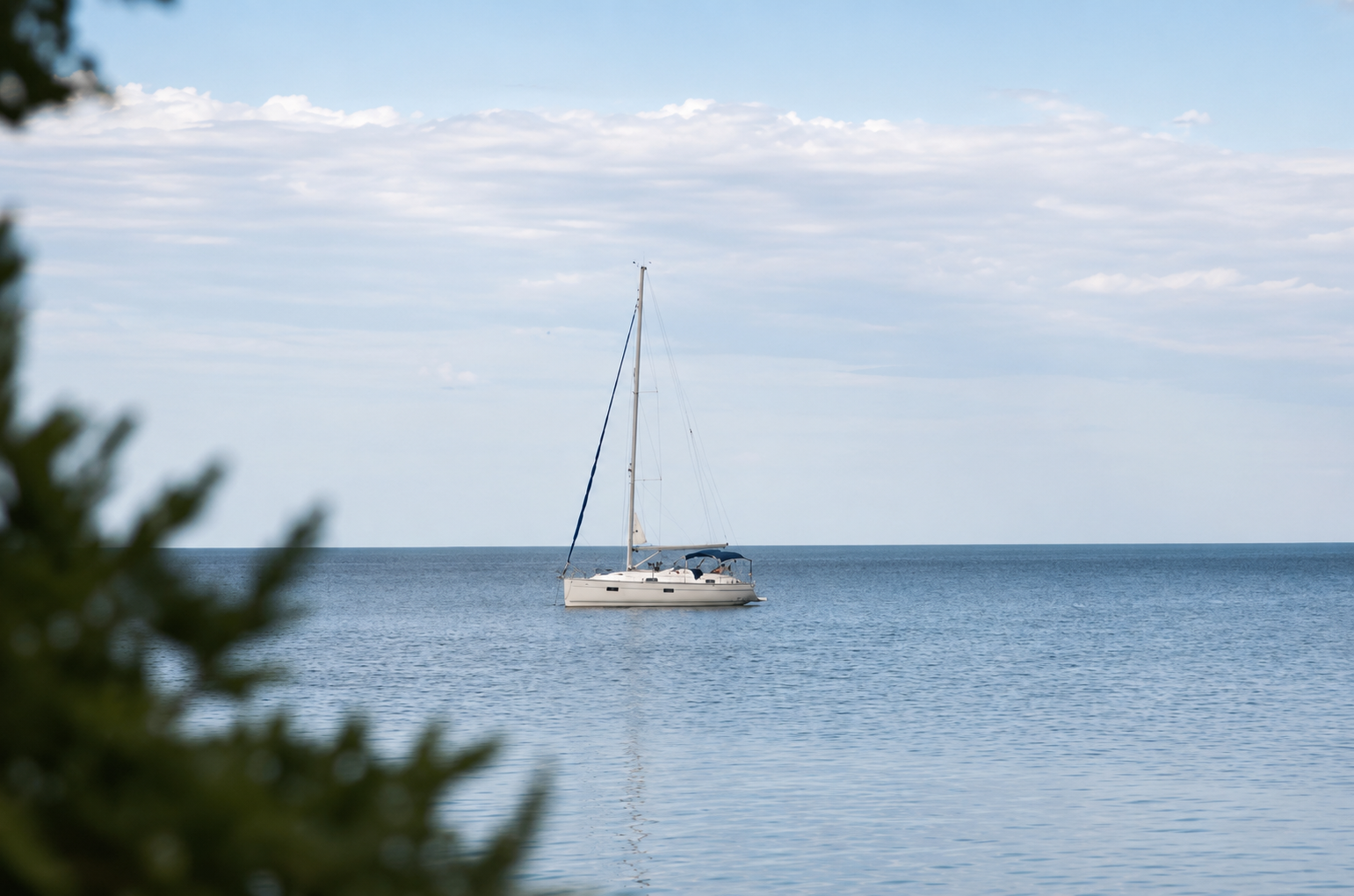
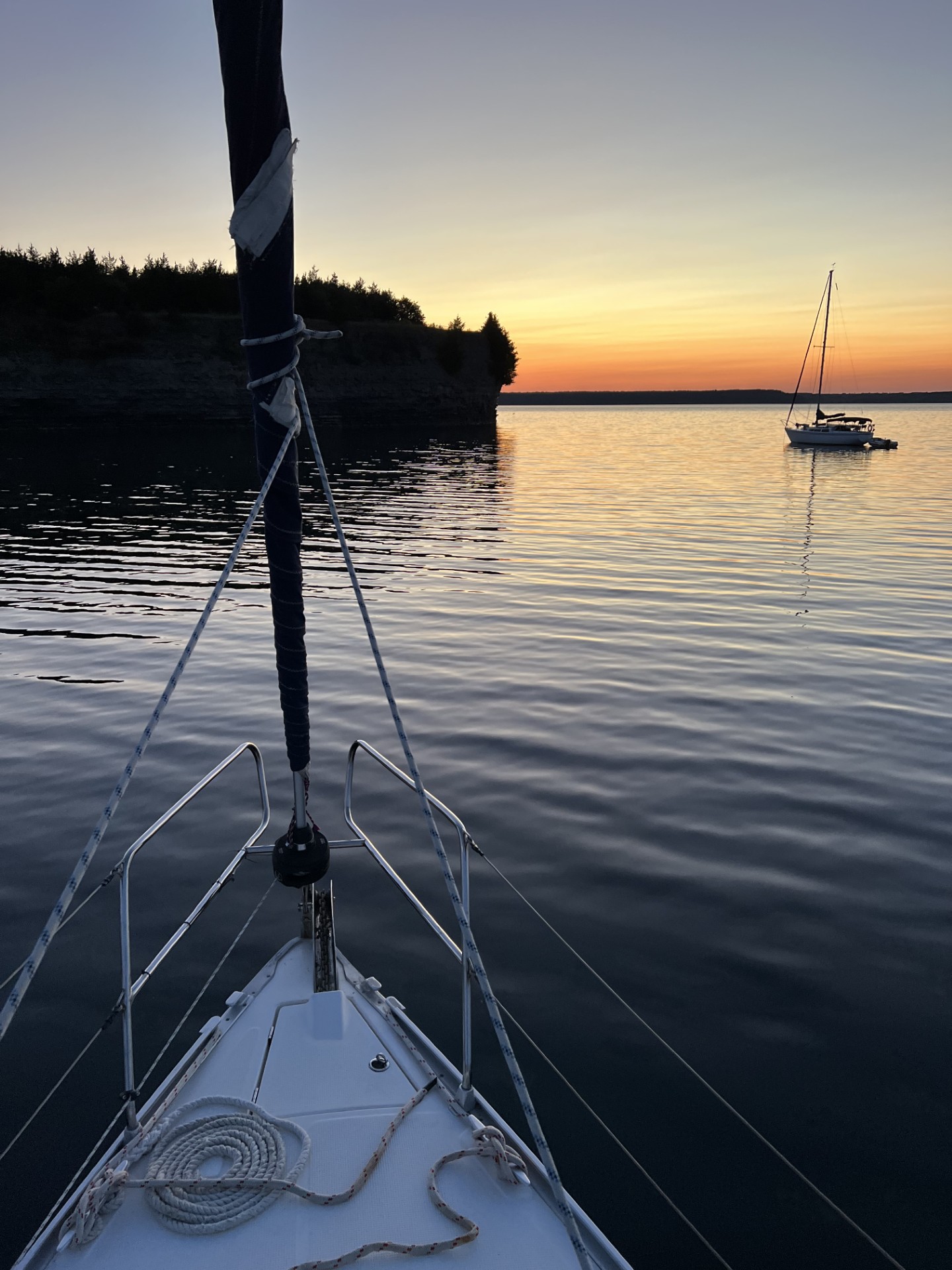
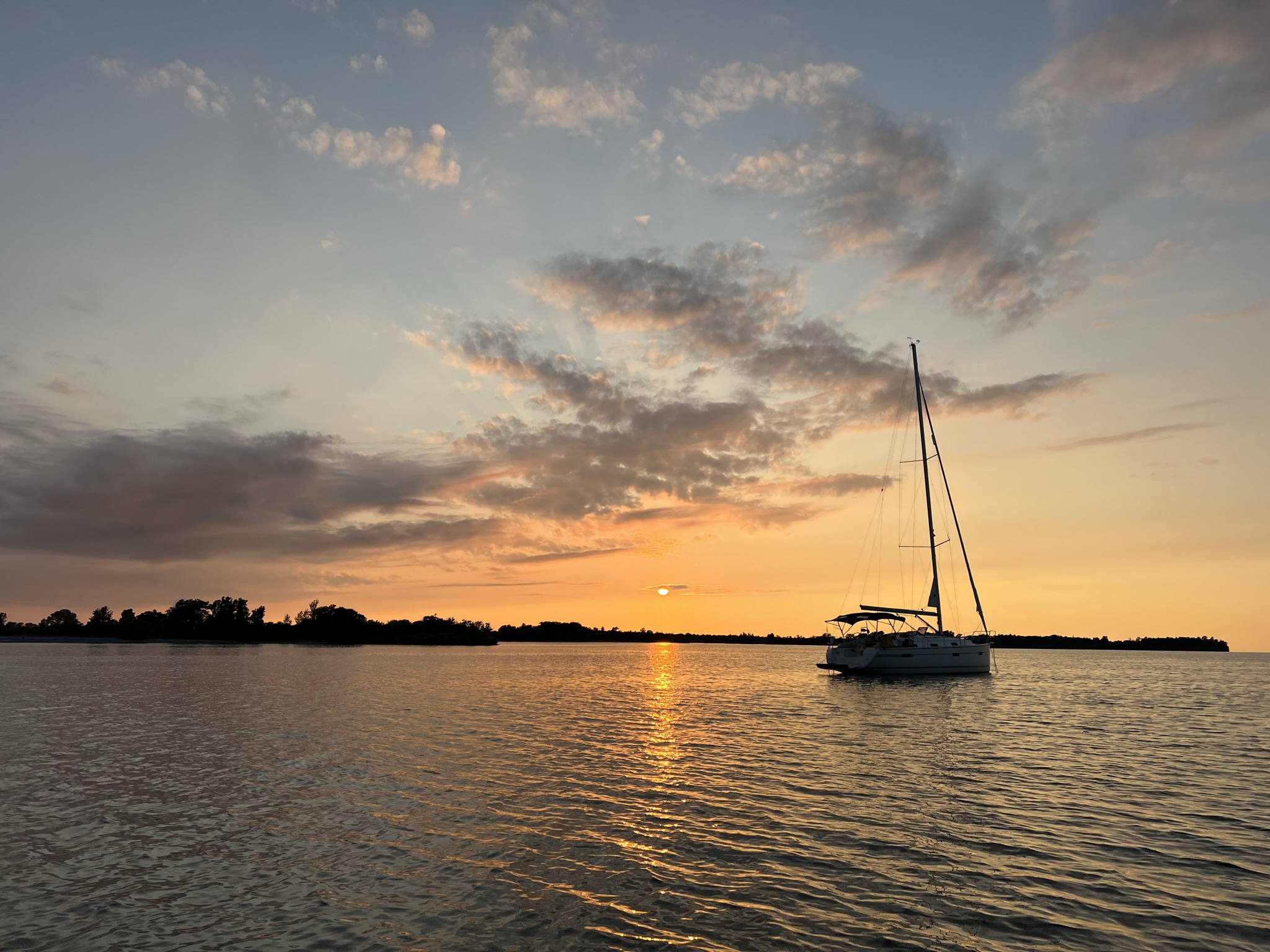
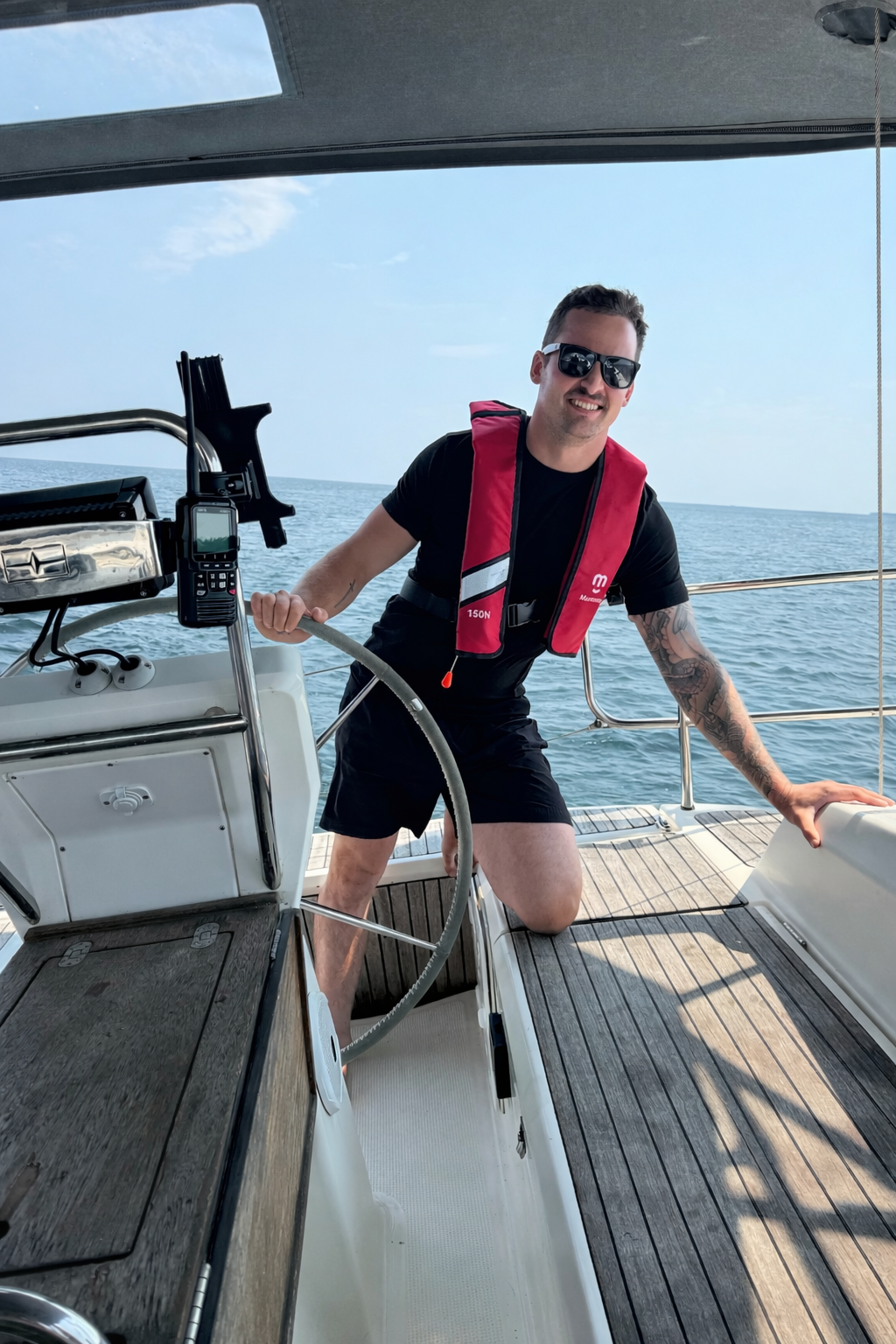
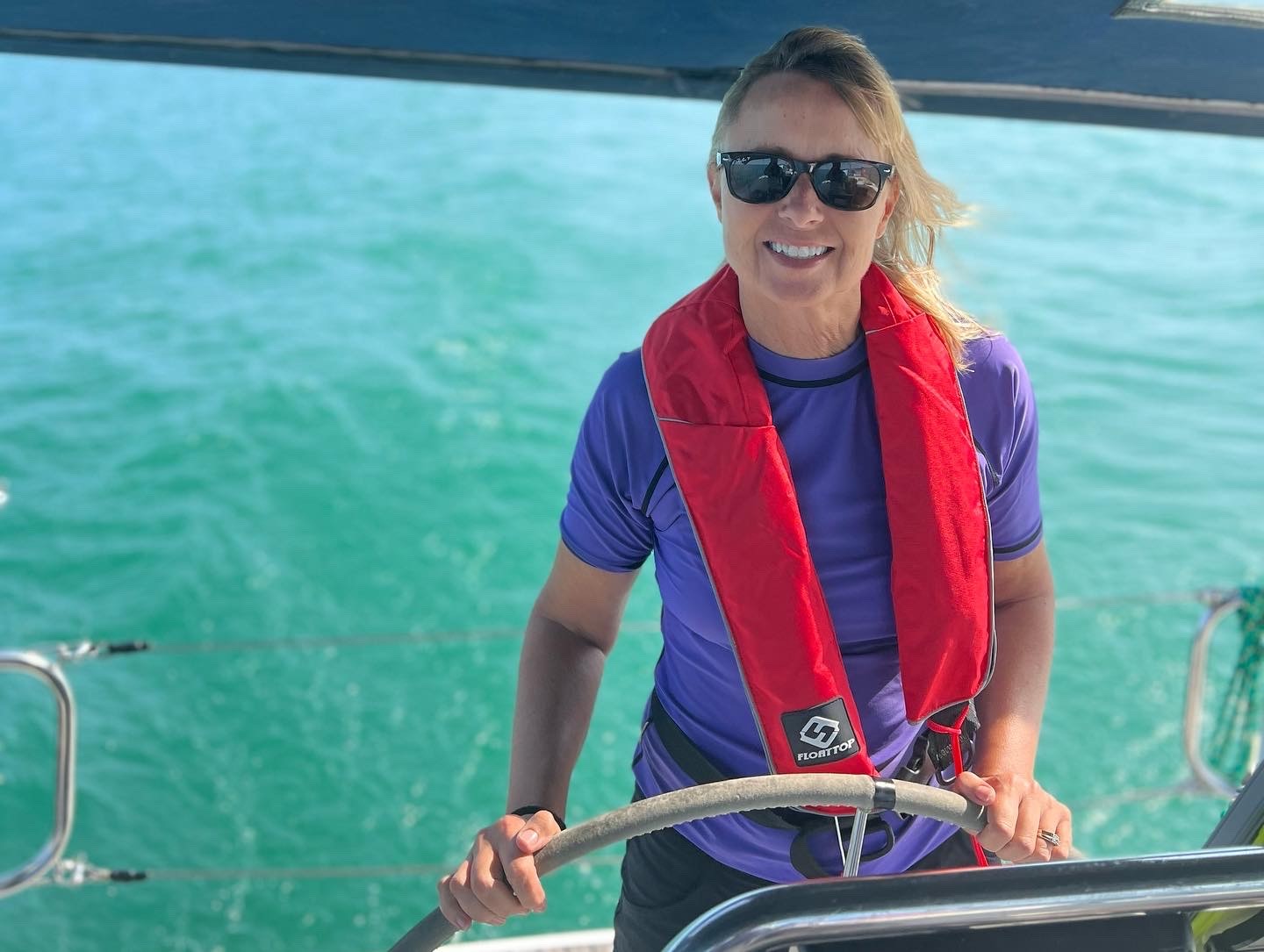
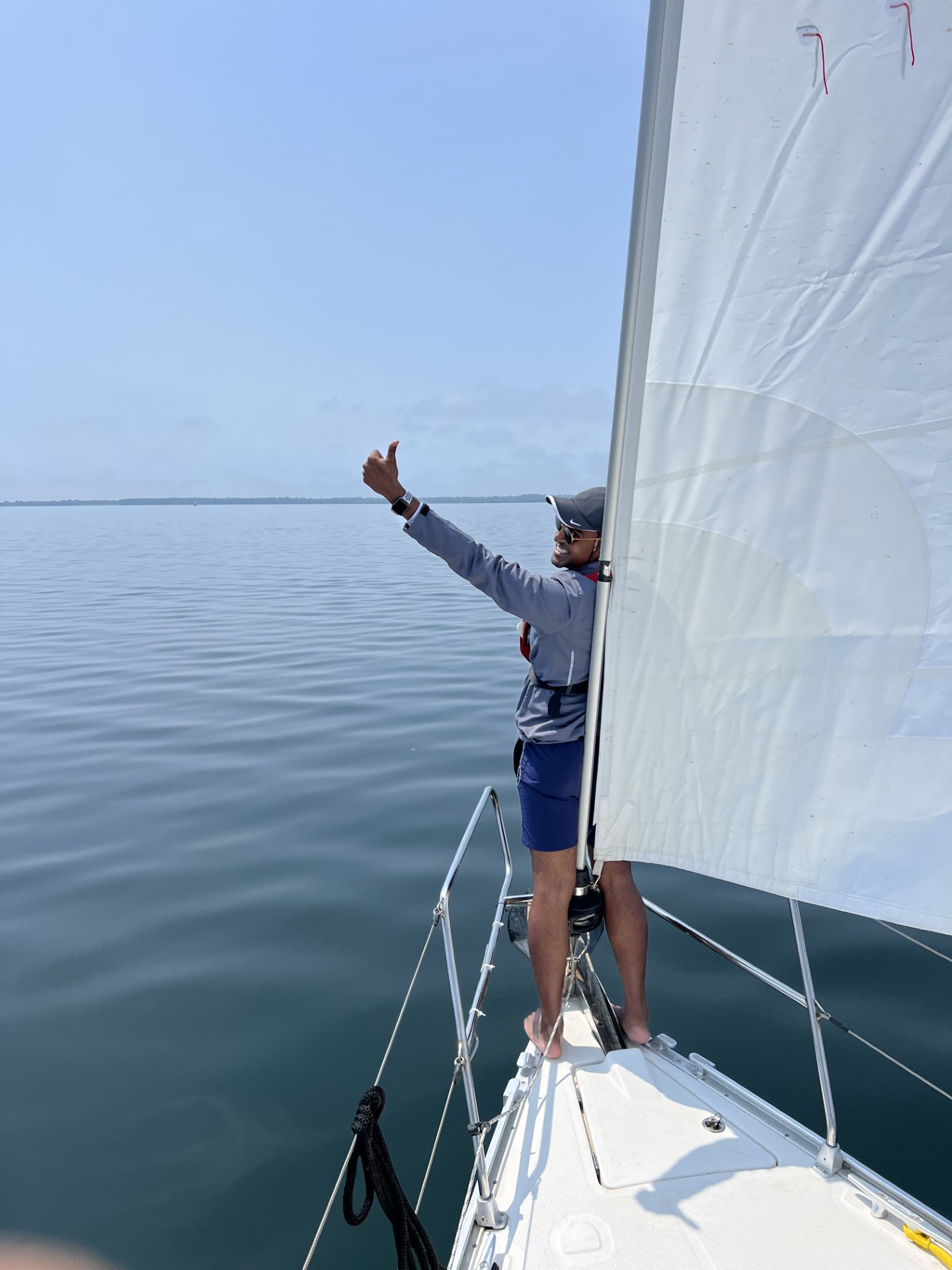
Sweetwater at anchor on Lake Ontario at sunset
National Yacht Club Presents
Live Info Session
Sail Canada · Intermediate Cruising

Intermediate Cruising.

Sail in the city, master it in Prince Edward County.

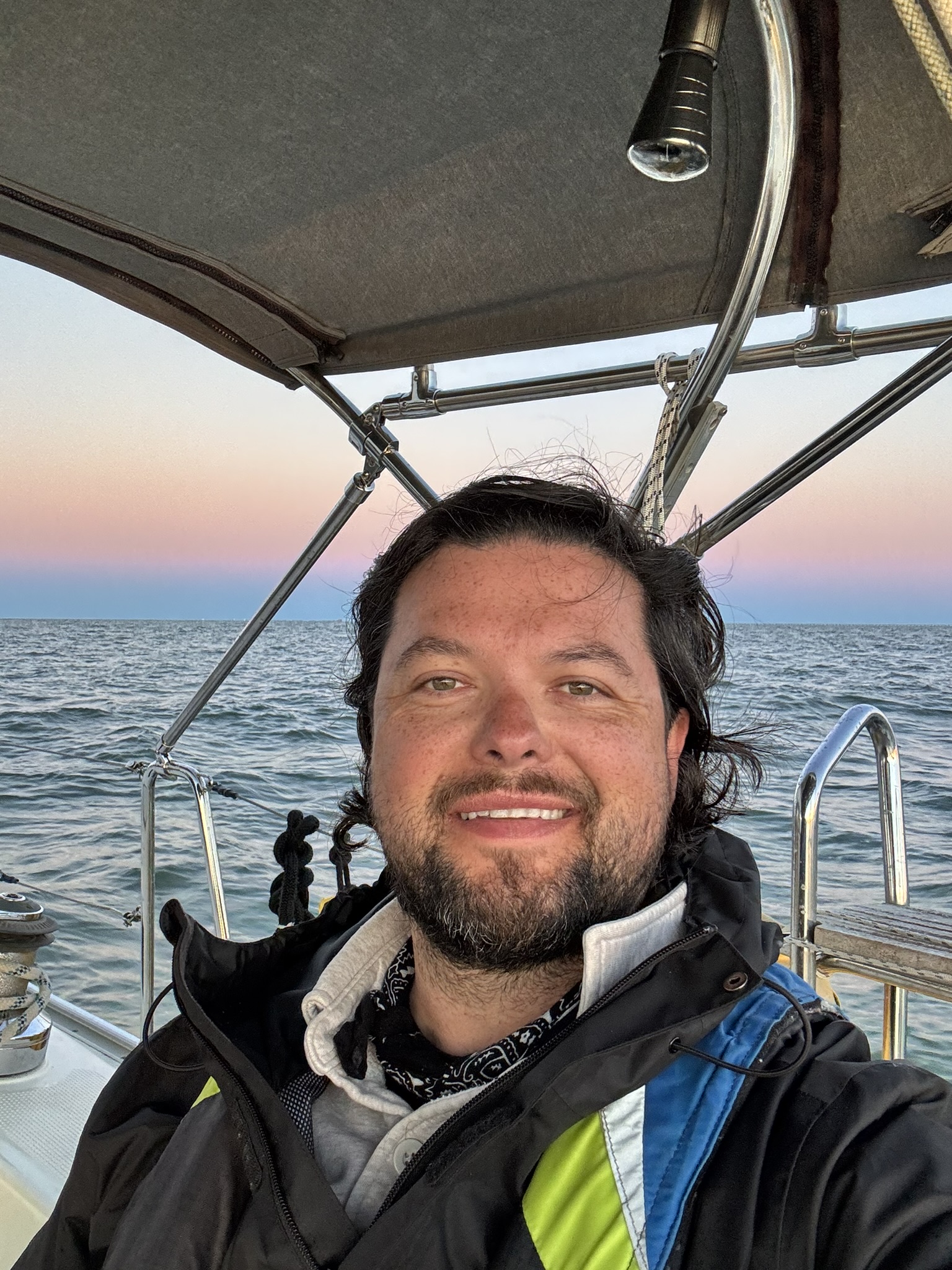
Evan Logan · Happy Sailing Academy Aboard Sweetwater · Eastern Lake Ontario

In this
session.

  • No. 01The school and the boat
  • No. 02Why Eastern Lake Ontario
  • No. 03The Sail Canada pathway
  • No. 04Prerequisites & timing
  • No. 05Six days, day by day
  • No. 06What you'll practice
  • No. 07Dates, price, what's included
  • No. 08Booking through NYC

No. 01 · The school and the boat

A Sail Canada certified school in Prince Edward County.

Founded in 2022 by Evan Logan, now in our fifth season. One principle, never compromised: every student steers, every student navigates, every student docks.

Students on the foredeck of Sweetwater at golden hour on Lake Ontario
Aboard Sweetwater on a summer evening in Adolphus Reach. Three students, one bottle of cold water, the boat sailing herself.

Happy Sailing is small on purpose. Four students per course, one boat, one instructor, one week. There is no second classroom. No overflow group. Nobody waiting their turn at the helm while someone else gets the lesson.

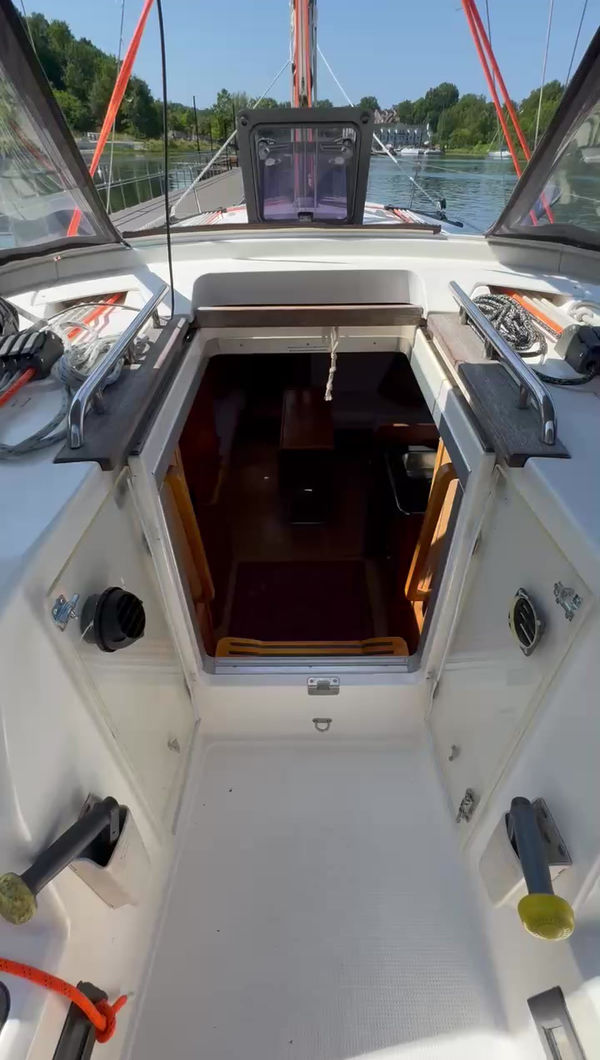
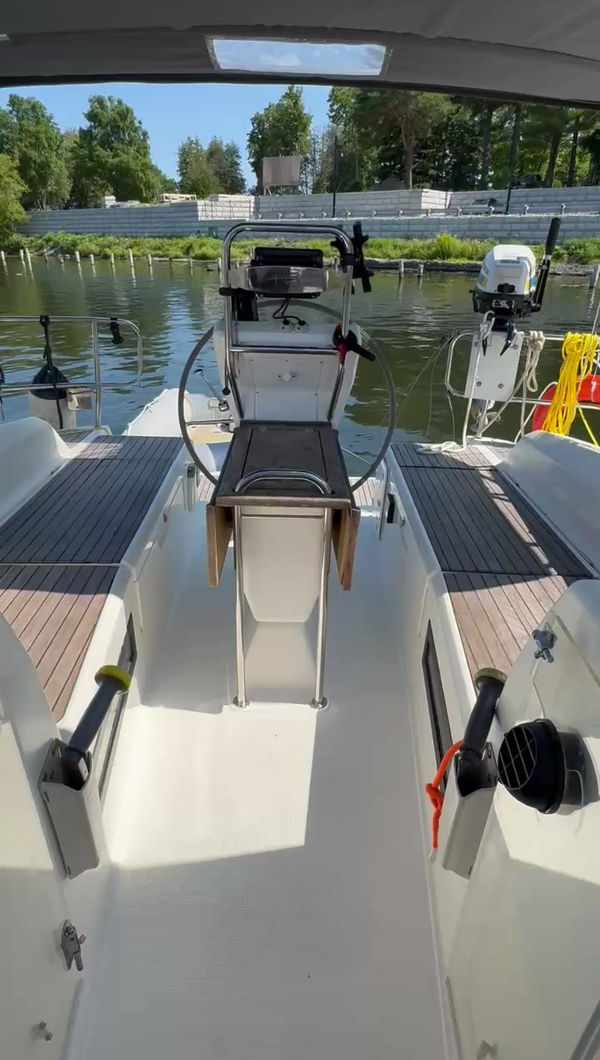
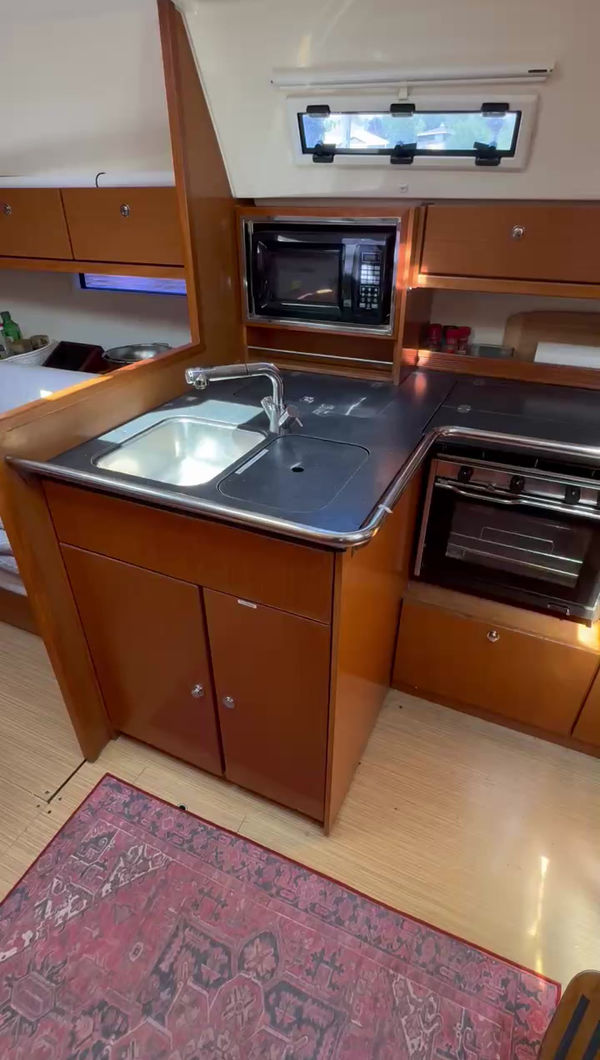
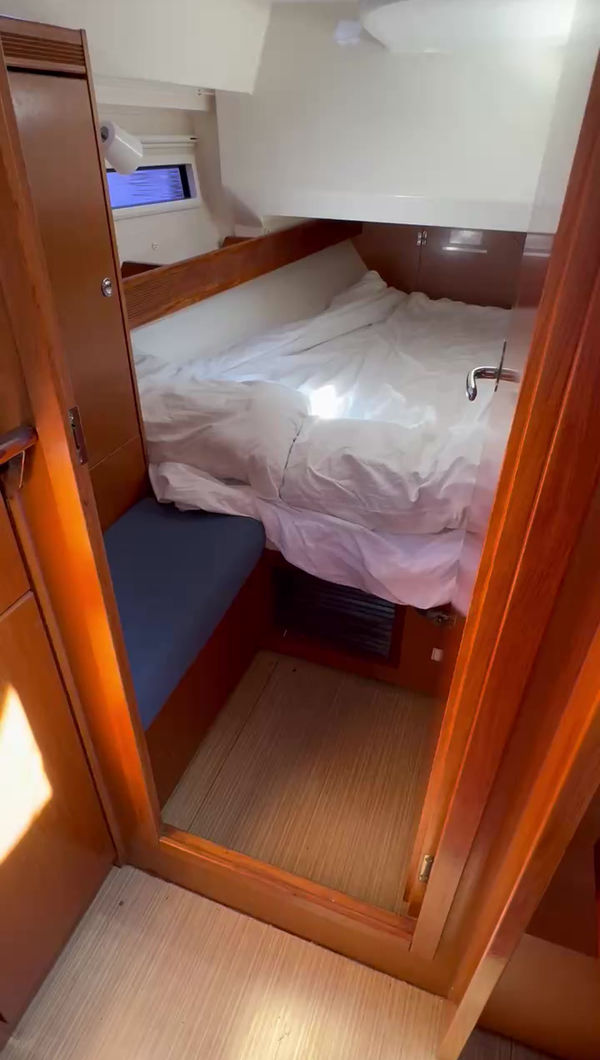
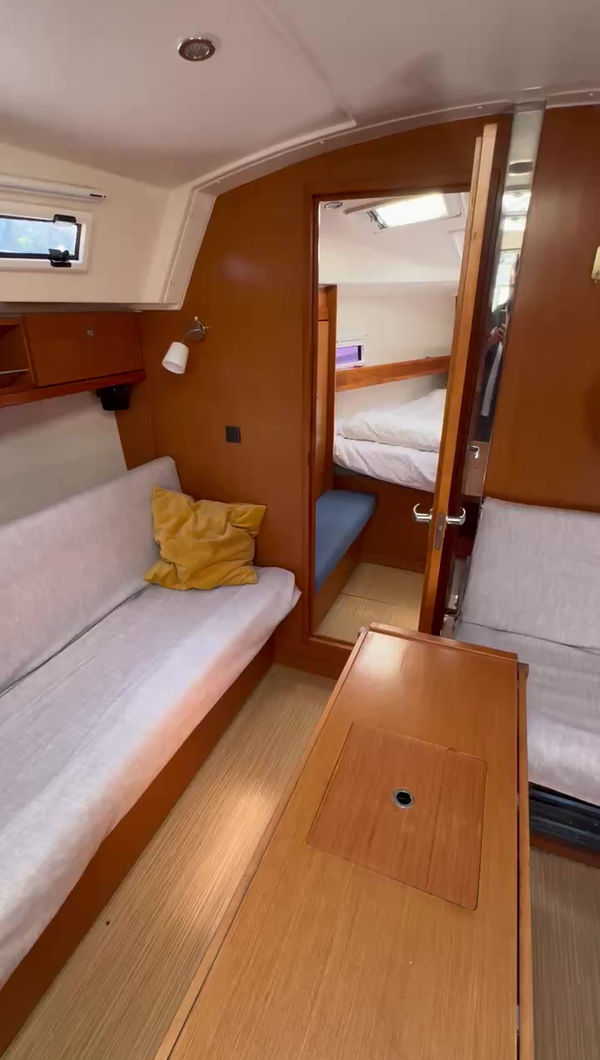
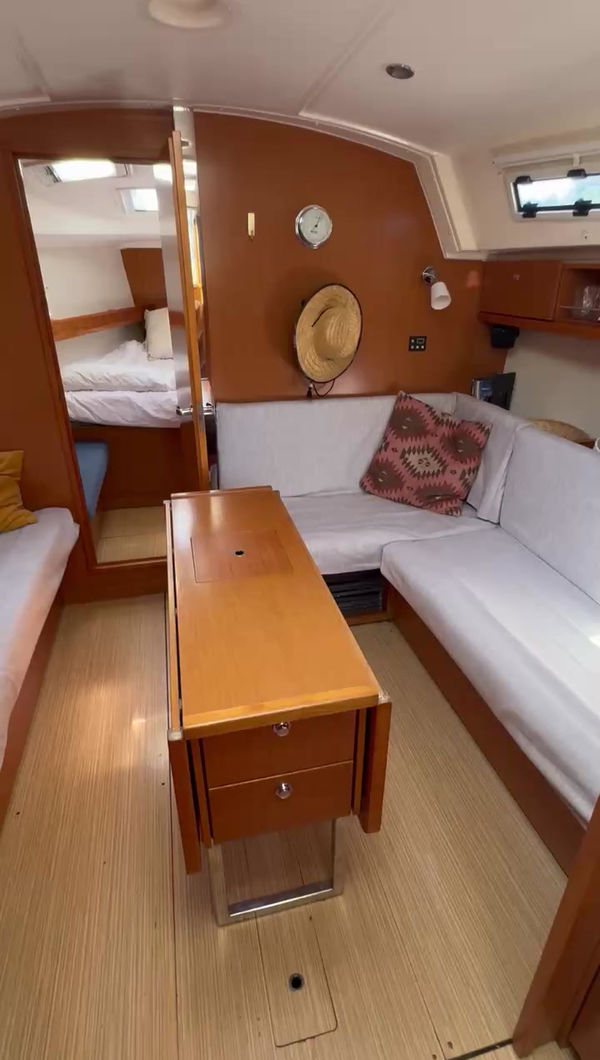
It is a Sail Canada certified school, headquartered at Slip 13 of Picton Harbour Marina on Lake Ontario, and a sister operation in Nassau through the winter. Across the 2025 and 2026 seasons we have logged over 5,000 nautical miles aboard Sweetwater, a 2011 Bavaria 36 cruising sloop.

The Intermediate Cruising course is the centrepiece. It is six days liveaboard, departing and returning from Picton, and it is the credential most cruising sailors will use for the rest of their lives.

4
Students per course, maximum
5,000+
Nautical miles aboard Sweetwater
36 ft
2011 Bavaria cruising sloop
5th
Season from Picton Harbour Marina

Featured in Condé Nast Traveler's Best Places to Go 2026 for Prince Edward County. Most schools run six to eight students per boat; you spend half your time watching someone else steer. With us, every student gets real time on the helm.

Eastern Lake Ontario is the headquarters of Canadian sailing.
Sail Canada · Portsmouth Olympic Harbour, Kingston · 1976
Sailors aboard Sweetwater watching the sun set over Lake Ontario
The light, the breeze, the late summer haze. Conditions you train in here are the same conditions the national team trains in here.

No. 02 · The cruising ground

Where you learn matters.

Sail Canada is headquartered in Kingston, twenty-five nautical miles east of Picton. This is where Canadian championships and Olympic-class racing happen. It is also where you'll learn to cruise.

  • Bay of Quinte, Adolphus Reach, Main Duck Island

    An archipelago of small towns and quiet anchorages. Wellington, Waupoos, Bath, Sandbanks, Kingston, the Thousand Islands beyond.

  • Real water, real distances

    Crossing from Picton to the south shore is thirty nautical miles of open water. This is not a sheltered-bay sailing school.

  • The freshwater advantage

    World-class scale, none of the salt. The boat washes herself.

1,000+ km
Of cruising shoreline within range of Picton
12 nm
Offshore to Main Duck Island
1976
Olympic sailing venue, Kingston

Sail Canada being headquartered in Kingston is a fact most Toronto sailors don't know. The eastern end of the lake is where the country's elite training, world championships, and Olympic-class racing happen. NYC members training in PEC are sailing in the same waters as the national team.

No. 03 · The pathway

Where Intermediate sits.

The four-stage Sail Canada path. Intermediate is the credential charter companies ask for, worldwide.

Step 01

Start Keelboat

Two-day introduction. First time at the helm, basic sail handling, points of sail.

Step 02

Basic Cruising

Four days of small-boat handling, anchoring, docking, the foundations of cruising under sail.

Step 03 · You are here

Intermediate Cruising

Six days liveaboard. Multi-day passages, navigation, emergency response. The credential needed to bareboat charter worldwide.

Step 04

Advanced Cruising

Five days, including night sailing and a continuous offshore passage of 48 hours or more.

Intermediate is the practical ceiling for most cruising sailors. BVI, Greece, Croatia, Sicily, all of the major charter companies ask for this standard or an IYT equivalent. Most NYC members will use this credential for the rest of their sailing life.

No. 04 · Prerequisites & timing

All four are offered by NYC.

Book first; certify within twelve months.

  • 01
    Basic Cruising StandardSail Canada certified, 4-day course
    Offered by NYC
  • 02
    Basic Coastal NavigationChart work, fixes, ETAs, pilotage
    Offered by NYC
  • 03
    ROC(M) VHF with DSCRestricted radio operator, maritime
    Offered by NYC
  • 04
    Pleasure Craft Operator CardPCOC, Transport Canada
    Offered by NYC

How the timing works

Book the course first. Certify within twelve months.

Members can register for Intermediate Cruising without holding the prerequisites yet. The four can be completed through NYC's own programs, before or after your course.

The course itself runs the same either way. The Sail Canada certification is issued once all four are in hand.

The rule All four prerequisites must be complete within twelve months of your Intermediate course for Sail Canada to issue the certification.

This is the partnership working at its best. NYC delivers the prerequisites in Toronto; Happy Sailing delivers the liveaboard Intermediate course in PEC. A member with no Sail Canada credentials today can be Intermediate certified inside a year.

No. 05 · The format

Six days, liveaboard, daytime passages.

Departing and returning from Picton Harbour. Every student rotates through skipper and crew. Sleep aboard for the full week.

6 days
Liveaboard, departs Picton
~38 hrs
Of structured instruction time
Daytime
Per Sail Canada Intermediate standard
Skipper + crew
Every student rotates both roles

A day aboard

From morning briefing to night at anchor.

0700
Breakfast aboard
0800
Briefing, weather, voyage plan
0930
Departure
Mid-day
Passage, drills, lunch hove-to
1700
Arrival, anchor or moor
1800
Debrief, theory
Evening
Dinner, group activity

~7 hours of structured instruction per day, ~5 of which is on the water. Mornings start at 0800 sharp with weather and a voyage plan. By Day 5, every student has been on the helm in every condition we have seen.

No. 05 · Curriculum

Six days, day by day.

Built directly from the Sail Canada Intermediate Cruising Standard. Each day carries specific learning outcomes and performance objectives.

Day 01

Boat, systems, first sail

  • Safety briefing and gear check
  • Below and above deck inspection
  • Marine diesel engine lesson
  • Weather and voyage plan
  • Manoeuvring under power
  • Sailing circles, baseline
  • Anchoring, set the hook

Day 02

Navigation & COB

  • Nautical chart overview
  • Two and three bearing fixes
  • Dead reckoning
  • Tacking and gybing practice
  • COB triangle method
  • Reefing under sail
  • Take a mooring

Day 03

Pilotage & harbour entry

  • TVMDC corrections
  • Depth and chart datum
  • VHF radio call practice
  • Close-hauled sailing
  • COB heave-to / falling leaf
  • Harbour entry and docking
  • Evening: COLREGS game

Day 04

Docking & free sail

  • Rafting procedures and hazards
  • Preparing a vessel for storage
  • Spring-line departures
  • Stern-to docking
  • Standing turn exercises
  • Free sail to next anchorage
  • Evening: COLREGS 40 & 45

Day 05

Self-led passage & eval

  • Plan, plot, execute return voyage
  • Tacking, gybing, heaving-to
  • COB recovery in real conditions
  • Candidate-led, instructor observing
  • Individual final evaluations
  • Logbook sign-off
  • Certification on success

Two pre-course Zoom sessions cover vessel briefing, gear, documents, meal planning, and introductions. Daily self-directed reading reinforces theory between days. Day 5 is the self-led return passage: students plan, plot, and execute without instructor intervention.

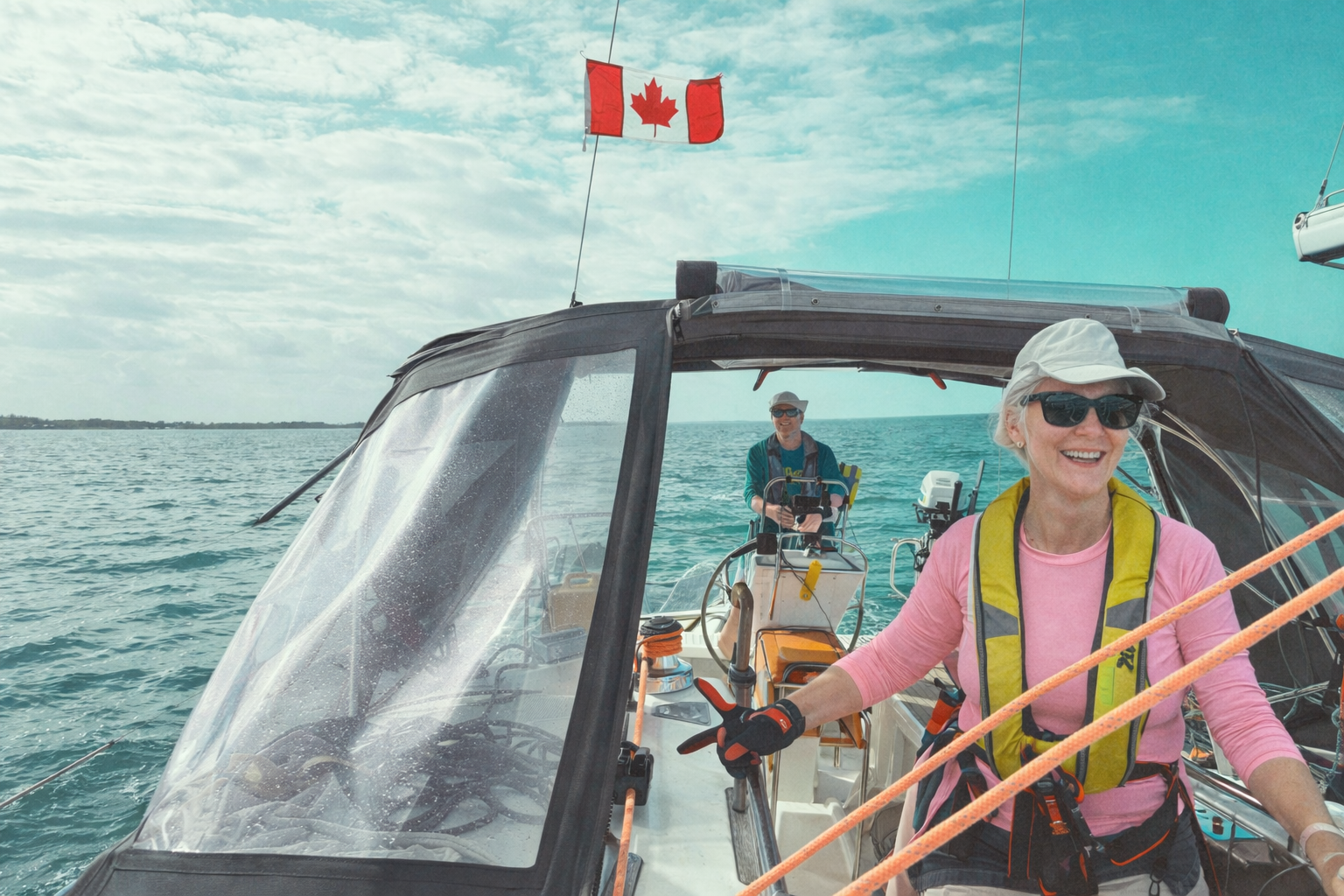
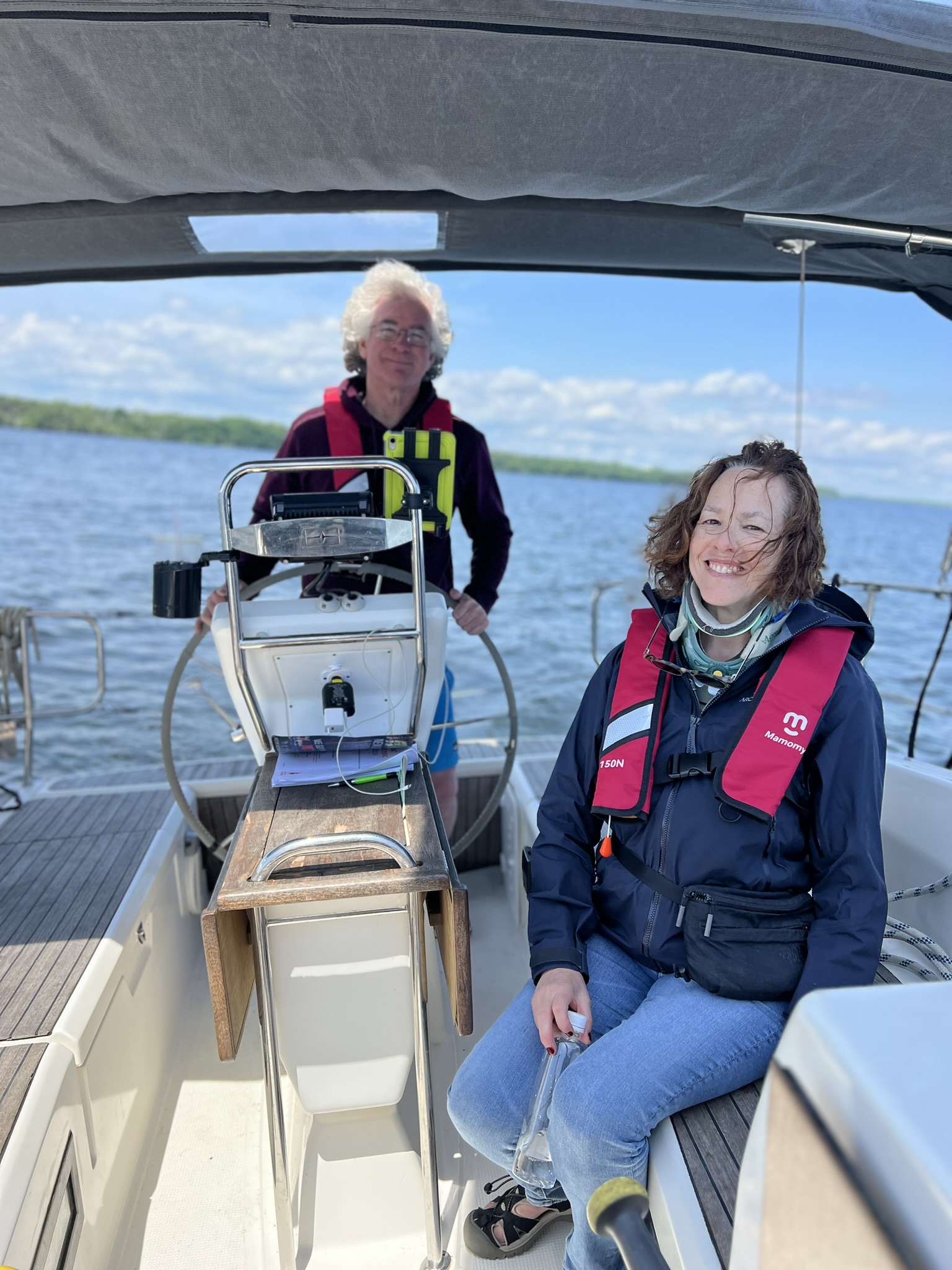
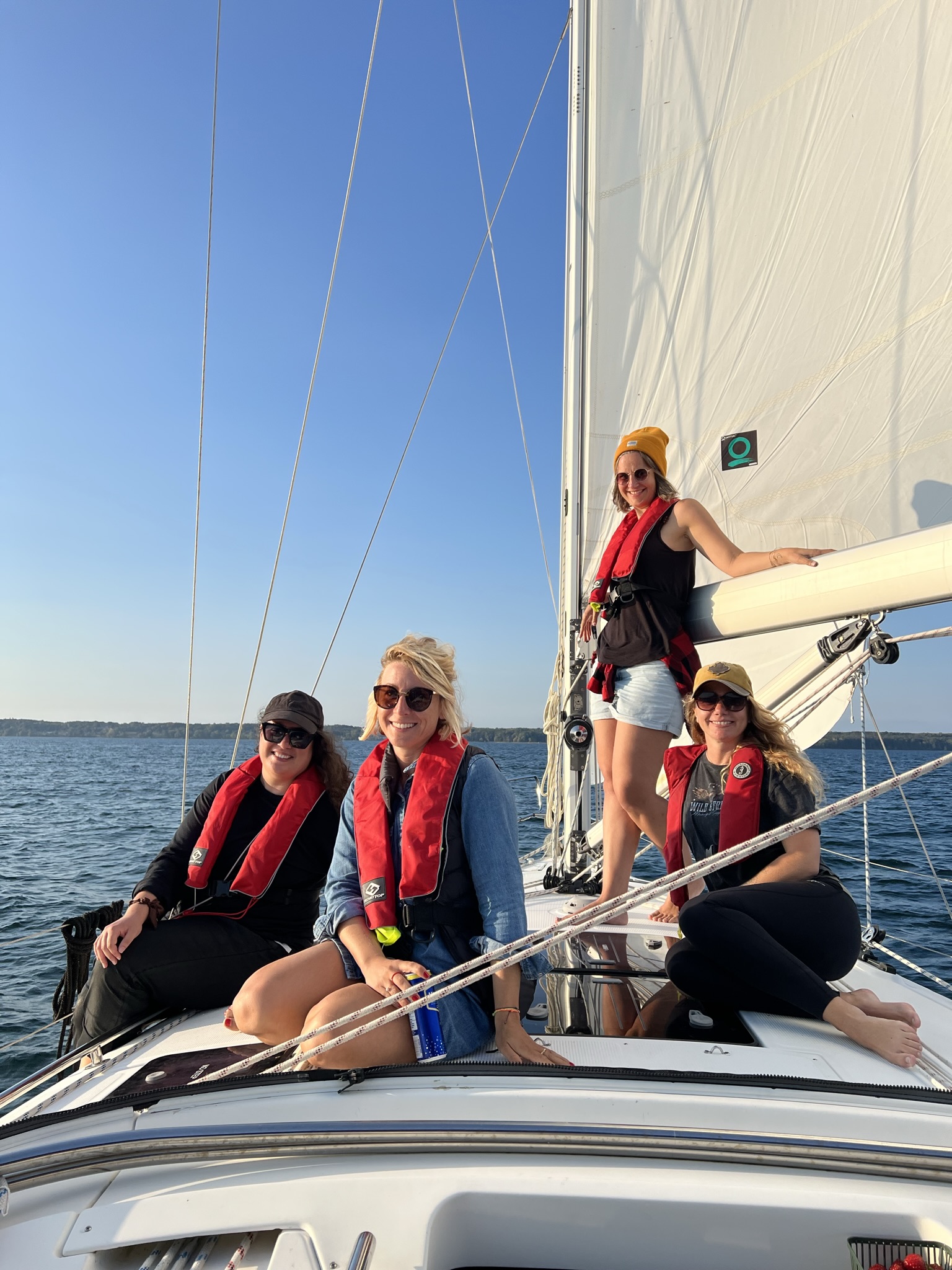
Four students aboard Sweetwater sailing on Lake Ontario
Mid-week, mid-lake. The skipper has the helm, the crew is in the cockpit, everyone is doing something with intent.

No. 06 · On the water

What you'll practice.

Two skill sets, both refined to the Sail Canada Intermediate standard.

  • Sail handling

    Points of sail, tacking and gybing, reefing under way, sail trim with traveler and jib cars, heaving to.

  • Boat handling under power

    Close-quarters manoeuvring, mooring buoy pickups, spring-line departures, stern-to and side-to docking, standing turn exercises.

Most students see the biggest jump in boat handling under power. By Day 4, springing off a dock in a crosswind feels routine. That is the skill that separates competent cruisers from those who avoid marinas.

Sweetwater anchored at sunset on Lake Ontario
Anchoring & pilotage Single anchor with proper scope. Stern line ashore. Mediterranean mooring. Picking up a transient ball under sail. Pilotage into unfamiliar harbours, chart and compass.

No. 07 · Seamanship

When things go wrong.

Crew overboard is the headline. The other seven matter too, and Sail Canada requires demonstrated competence in all of them.

01Springing a leak
02Steering failure
03Grounding
04Fouled propeller
05Dragging anchor
06Fire or propane leak
07Engine failure
08Crew overboard recovery

Two methods of COB recovery, both practiced: the Sail Canada Reach/Tack/Reach triangle and the heave-to / falling-leaf alternative. Both have moments where they are the right call.

No. 08 · Theory & ashore knowledge

What you'll know by the end.

Reinforced every evening at anchor and through self-directed reading. Written exam at the end, 70% to pass.

Planning

  • Fuel range
  • Water and tankage
  • Provisioning
  • Customs and clearance
  • First aid kit

Vessel systems

  • Electrical and battery banks
  • Plumbing and head
  • Refrigeration
  • Galley and stove
  • Sail handling systems

Weather

  • Local heating and cooling
  • Fog formation
  • Wind against current
  • Forecasts and sources

Navigation

  • TVMDC corrections
  • Two and three bearing fixes
  • Speed, time, distance, ETAs
  • Passage and pilotage planning

Most students find the on-water portion harder than the theory. The written exam tests material we have already worked through aboard.

Provisions and meals aboard Sweetwater
Meals aboard. Coffee in the cockpit at sunrise. Dinner at anchor. Everything cooked aboard, included in the course.

No. 09 · What's included

$2,500, all-inclusive.

Included

  • Sail Canada certified instruction
  • All meals aboard
  • Fuel
  • Mooring and dockage
  • Course materials & logbook
  • Certification on completion

You bring

  • Personal gear and toiletries
  • Foul weather kit
  • Soft duffle, no hard luggage
  • Sailing gloves
  • Non-marking soled shoes

Compare a 7-day BVI bareboat charter at $5,000+ per person before instruction. This is fully instructor-led, all meals aboard, in waters arguably more demanding than the BVI. The value is in the cap of four and the quality of instructor time.

No. 10 · 2026 dates

Four sessions, four students each.

Inventory shared across the season. June filled first, which is typical.

June
21 to 26
Sold out
July
26 to 31
1 spot left
August
9 to 14
Open
September
13 to 18
Open
$2,500  per person, all-inclusive

Private bookings available: charter the whole boat for friends or family, set your own dates.

June is gone. July has one seat left. August and September are wide open and arguably the better sailing, more settled weather and warmer water. Members wanting June 2027 should get on the list now.

No. 11 · Booking through NYC

How NYC members get started.

First conversation to course confirmation is usually under two weeks.

Hand off to Nancy here if she wants to add anything about NYC's role, internal communications, or how the prerequisite courses run on the NYC side.

No. 12 · After Intermediate

Pathways forward.

Most Intermediate graduates come back for one of these within a year or two.

Next standard

Advanced Cruising

For offshore and night passages. Builds on Intermediate with extended cruising, night sailing, heavy weather, and complex pilotage.

International

IYT ICC endorsement

Recognized in Europe and beyond. Expected August 2026. Standard ask for Mediterranean charters.

Private

Private bookings

Friends and family, your own course, your own pace. Sweetwater chartered with instructor aboard.

The ICC endorsement is the new thing for 2026. Strong demand from members heading to Croatia, Greece, the Turkish coast. Once you have Intermediate, the ICC is a short upgrade.

Questions.
Thirty minutes for Q&A · Anything from the curriculum, the boat, the route

Get in touch

Reach out directly, or through Nancy.

National Yacht Club × Happy Sailing Academy. Sail Canada certified cruising education, headquartered in Prince Edward County.

Contact


Happy Sailing Academy · Est. 2022 Intermediate Cruising · 2026 Season